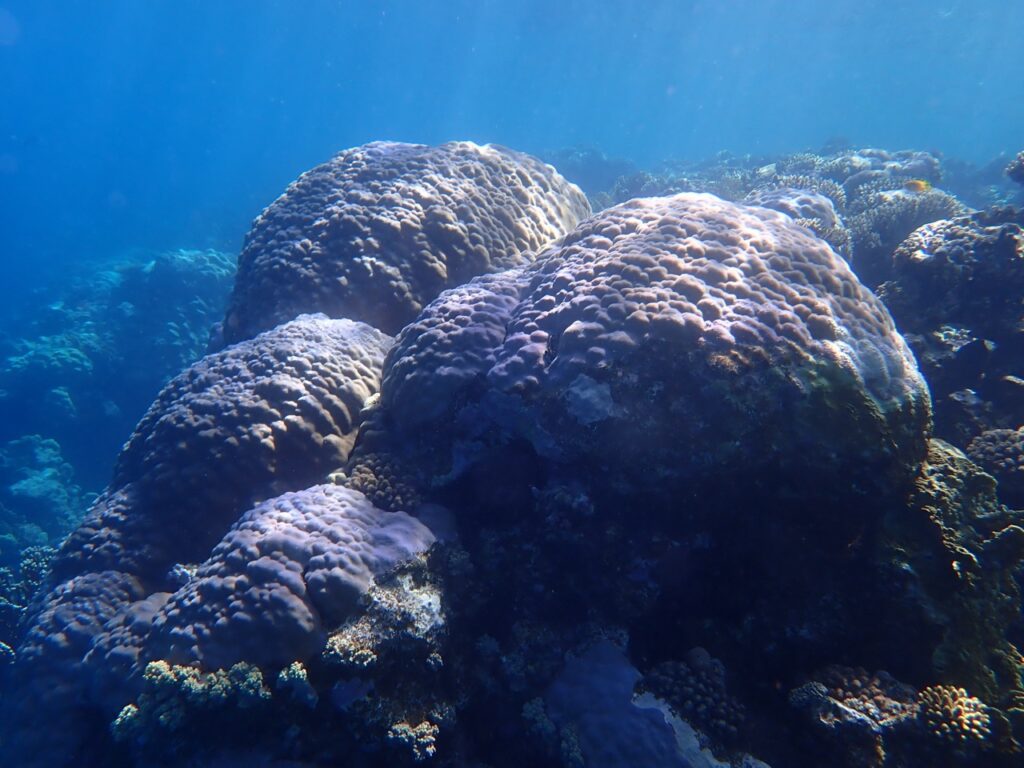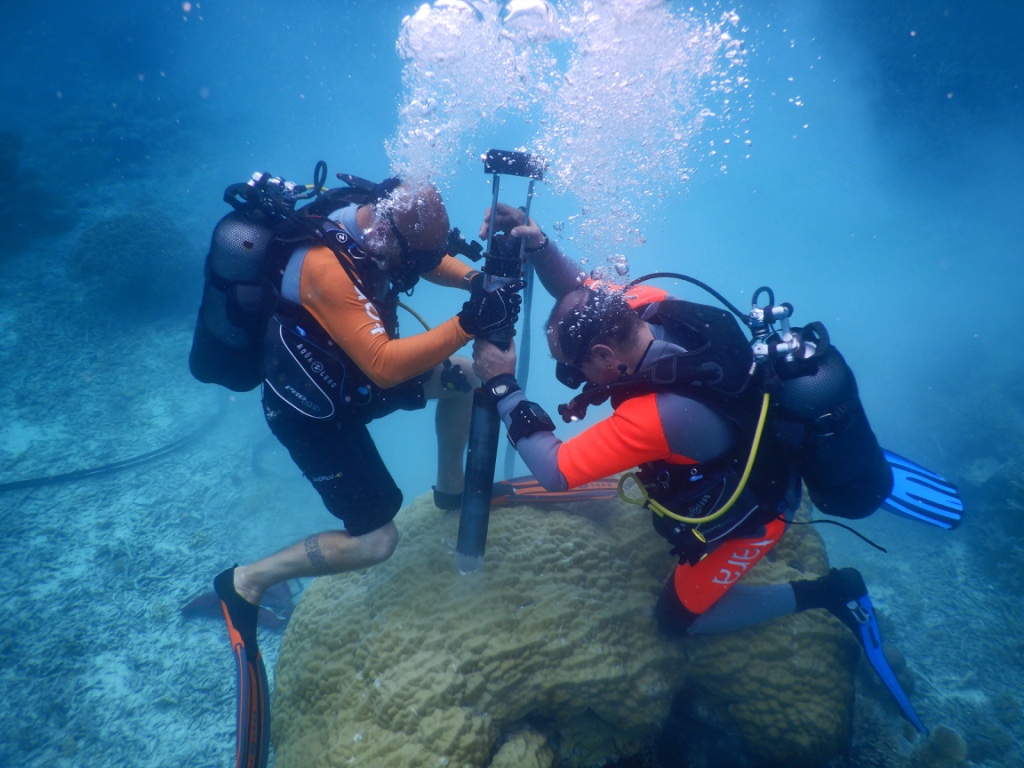
Coral reefs and the corals that build these ecosystems are immediately threatened by climate change. Our understanding of how coral holobionts—coral hosts and their microbial communities, including Symbiodiniaceae algae—adapt to environmental changes remains incomplete. Corals are long-lived organisms and their evolutionary change is supposedly slow so that dynamics in the associated Symbiodiniaceae communities offer a rapid adapation mechanism. Current methods that rely on short-term observations or experimental manipulations, do not fully capture the long-term adaptation that coral holobionts may undergo over centuries. The “CoreAdapt” project seeks to fill this gap by using coral skeleton cores as archives of past biological and environmental conditions, providing a unique long-term perspective on coral adaptation strategies. The study will assess centennial Symbiodiniaceae community dynamics and corall host adaptation using sequencing of ancient DNA traces from coral skeletal cores and link these two adaptation mechanisms of the coral holobiont to geochemical reconstructions of environmental changes. First, we will test how geochemical proxy shifts are related to Symbiodiniaceae community dynamics using existing coral cores to track changes in Symbiodiniaceae communities before, during, and after geochemical shifts in the coral skeletons. This approach provides a more comprehensive understanding of proxy incorporation and interpretation. Second, we will examine the link between long-term climate trends and the turnover of Symbiodiniaceae taxa at various reef sites across the Indo-Pacific. Coral cores collected during the Tara Coral Expedition serve as a timeline of environmental and biological changes. The study will assess how Symbiodiniaceae communities adapt to gradual ocean warming and recurrent severe heat stress episodes, documented in the coral skeletons over decades to centuries. Third, we will analyse genomic signatures of adaptation in coral hosts to historical climate extremes using deep metagenomic sequencing. This analysis will reveal whether corals exposed to more frequent and intense climate extremes show stronger signs of genetic adaptation, informing about the corals’ long-term capacity to survive under climate change. By integrating geochemical and biological data from coral cores, the “CoreAdapt” project provides a comprehensive view of how coral holobionts have responded to environmental pressures over centuries. This integrated approach not only aims to reveal the underlying biological mechanisms of coral adaptation and apply this knowledge for predicting future resilience, but also to enhance the accuracy of coral-based climate reconstructions.
Principle Investigator
Maren Ziegler (Justus Liebig University Giessen)
Project Scientist
N.N.