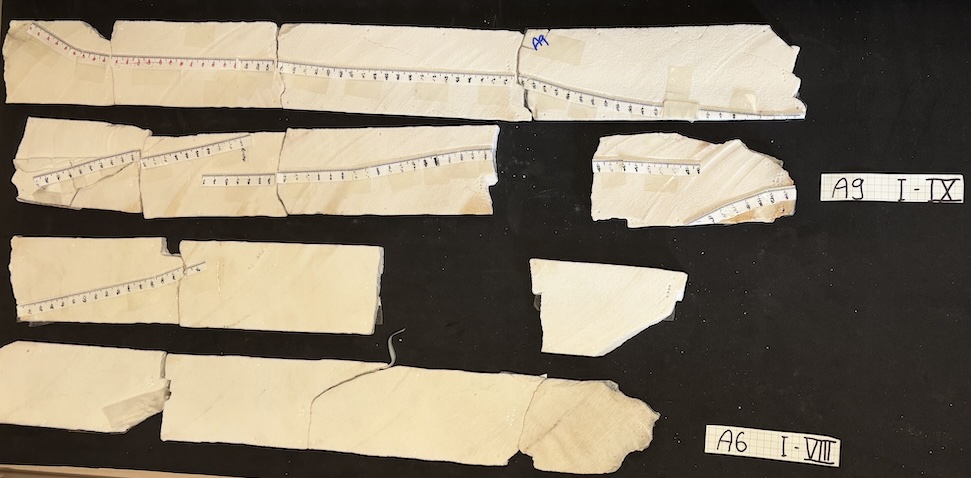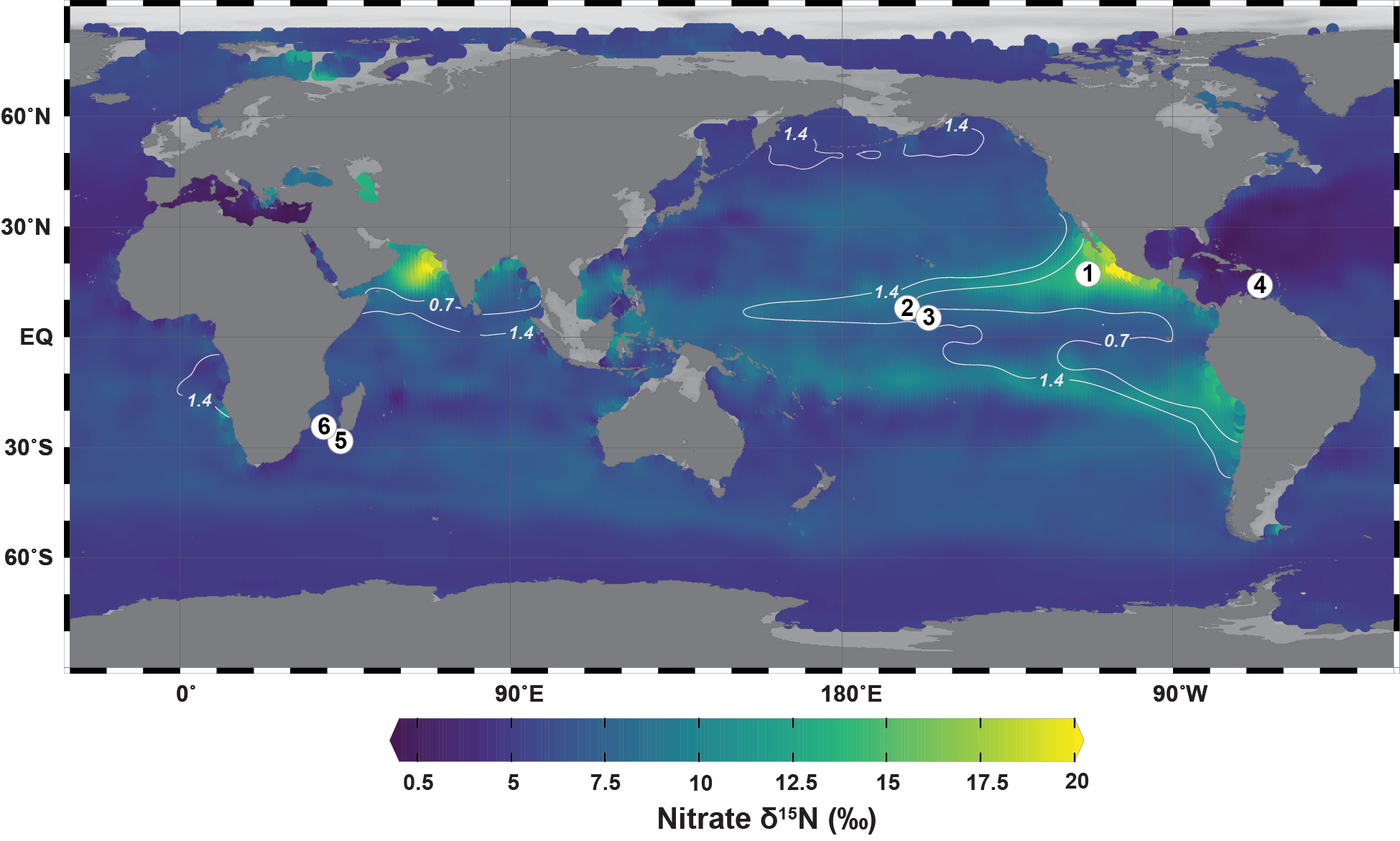
The global Nitrogen (N) cycle is expected to come under increasing pressure during this century as a consequence of both the acceleration of anthropogenic N inputs and global warming. However, the interactions and feedback mechanisms among the different components of the N cycle in response to human perturbations remain uncertain. At least part of the existing uncertainty can be attributed to the scarcity and relatively short time span covered by direct observations. The lack of information about the past can, in some cases, influence the interpretation of current observations by hindering the attribution of observed trends to natural processes or anthropogenic perturbations of the system. In phase 1 of this priority program, the NITROCENE project used a new analytical technique to generate high precision measurements of the N isotopic composition of the trace amounts of organic matter protected from alteration within the mineral structure of shallow-water stony corals over the past century. Our results have provided key insights on the mechanisms driving key aspects of the N cycle, i.e. decadal and interannual changes in water column denitrification and marine N2 fixation in the tropical Pacific, Atlantic and Indian oceans. However, the records generated are too short to identify longer term (e.g. centennial) trends, and limit our capacity to put the observed changes over the past century into a larger climatic context. This proposal for phase 2 of the priority program (NITROCENE-2) aims to extend the reconstruction of these processes over several centuries, as well as to explore potential changes in the driving mechanisms during different climate boundary conditions of the Holocene using fossil corals. In particular, we aim to obtain information from the mid-Holocene warm period (MHWP). The MHWP (centered around 6000 years ago) is the most recent time in Earth history when global temperatures were higher than preindustrial for a sustained period of time and is thought to be a useful geological analogue for the near future. Thus, the reconstructions proposed in NITROCENE-2 have the potential to provide new insights on the impact of prolonged global warming conditions on the interannual and decadal variability of water column denitrification and N2 fixation.
Principle Investigator
Alfredo Martinez-Garcia (MPI for Chemistry, Mainz)
Project Scientist
Alina Jäger