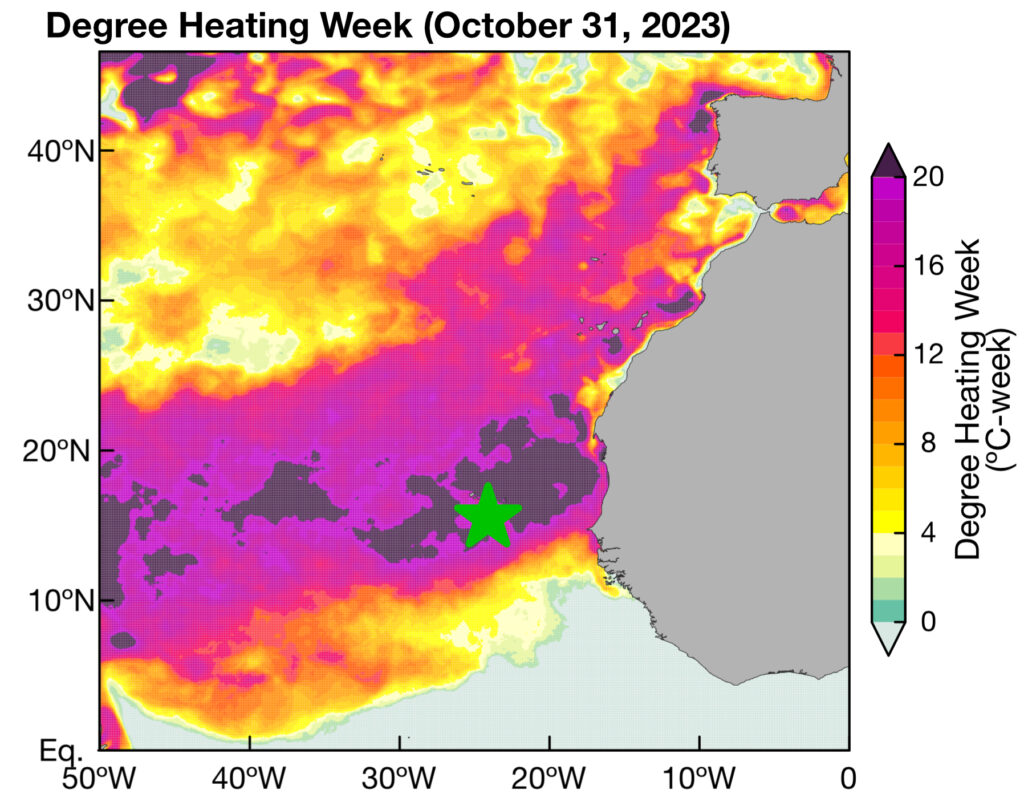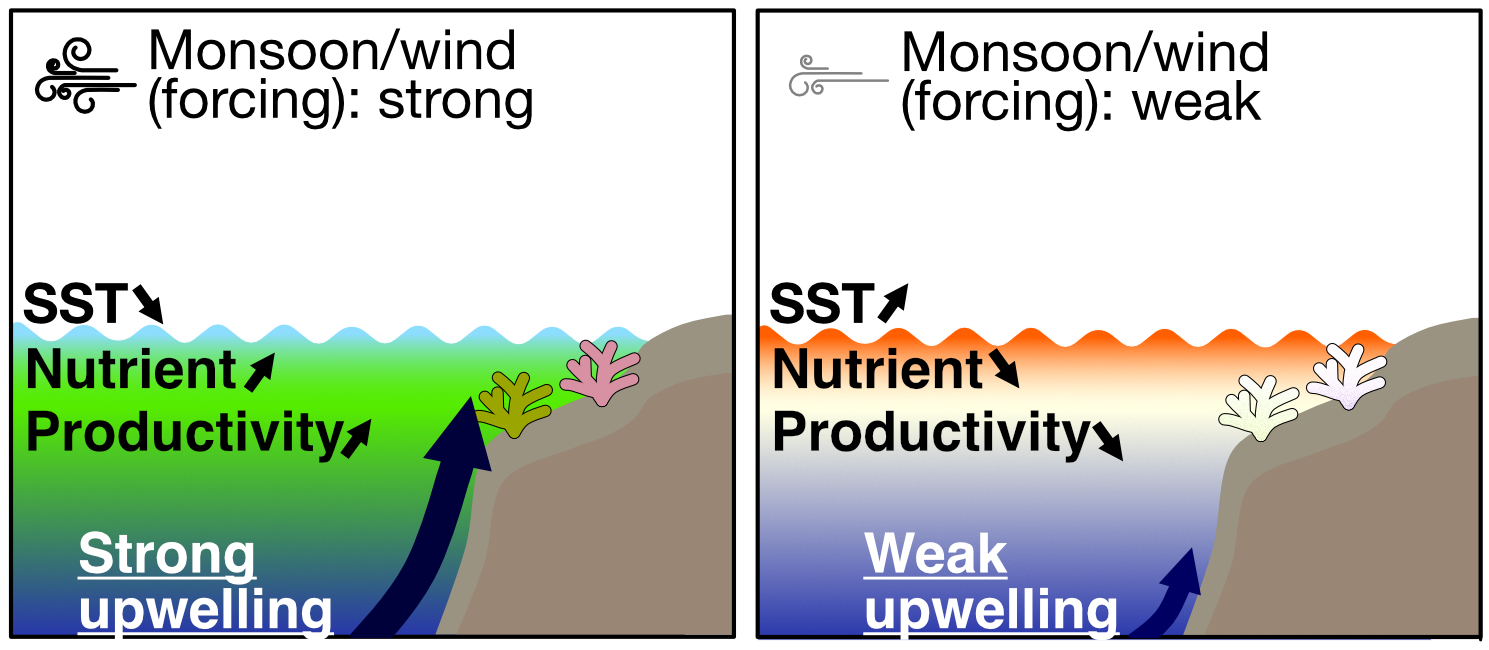
The adaptive strategy of reef-building corals (coral) in their current marginal habitats is key to their future survival. These regions can serve as environmental stepping stones for expanding corals’ habitats or even provide refugia. However, corals, in their marginal habitats, are currently sandwiched between two major stressors: increasing thermal stress in lower-latitude regions and intensifying ocean acidification in higher-latitude regions. Cape Verde is one of the corals’ marginal habitats in the Atlantic Ocean. In the future, thermal stress in Cape Verde during summer will become more severe due to anthropogenic warming and a weakening of the Canary Current. Besides, cold stress and ocean acidification during winter may intensify due to the intensification of the Canary upwelling. Understanding how Cape Verde corals respond to these multiple stressors will provide insights into the ability of corals to survive in changing environments and/or to expand their habitat to higher latitudes in the future. This project aims to understand short- and long-term changes of these two major stressors in Cape Verde and the response of the dominant coral species, Siderastrea radians, to them. Here, I reconstruct SST and Canary upwelling from past centuries through the extremely warm years of 2023/24 using multiple coral samples from Cape Verde. By comparing coral growth responses with environmental proxy reconstructions, I will examine how Cape Verde corals adapt to multiple stressors.
Principle Investigator
Takaaki Watanabe (Kiel University (CAU))