
Blog written by Larissa Roy and Jessica Hargreaves
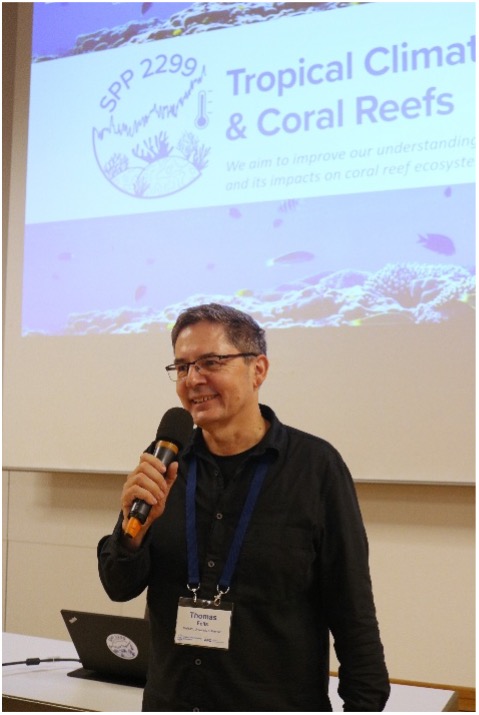
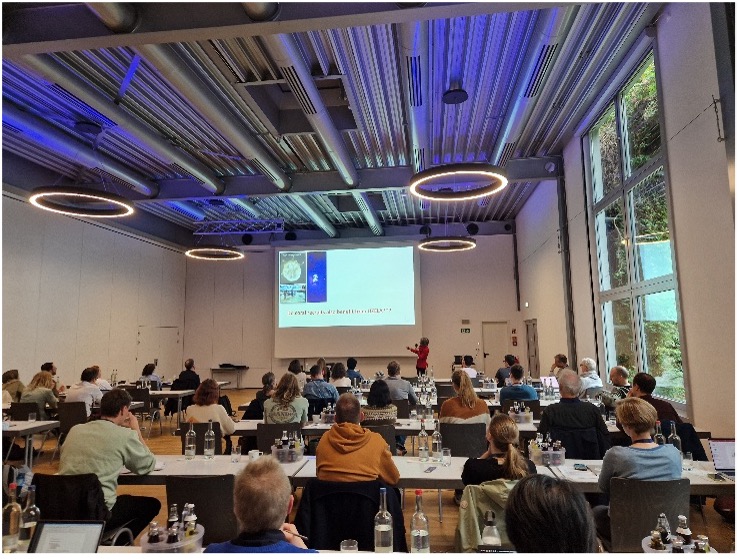
Thomas Felis (MARUM, University of Bremen), coordinator of the SPP 2299 Programme, welcomed our guests for the annual Meeting & Status Seminar 2025 of the DFG Priority Programme “Tropical Climate Variability & Coral Reefs” (SPP 2299) from the 6th to the 9th of October 2025 in Bremen. After more than three years of active research within the SPP 2299 programme (2022-2025), researchers of the programme and international guests came together to continue developing excellent science and fostering collaborations that will continue into the next phase (2026-2028) coordinated by Miriam Pfeiffer (Kiel University, CAU). The goal of the meeting was to share and discuss the different projects within the programme, to connect scientists from various disciplines and provide a unique opportunity once again to collaborate internationally.
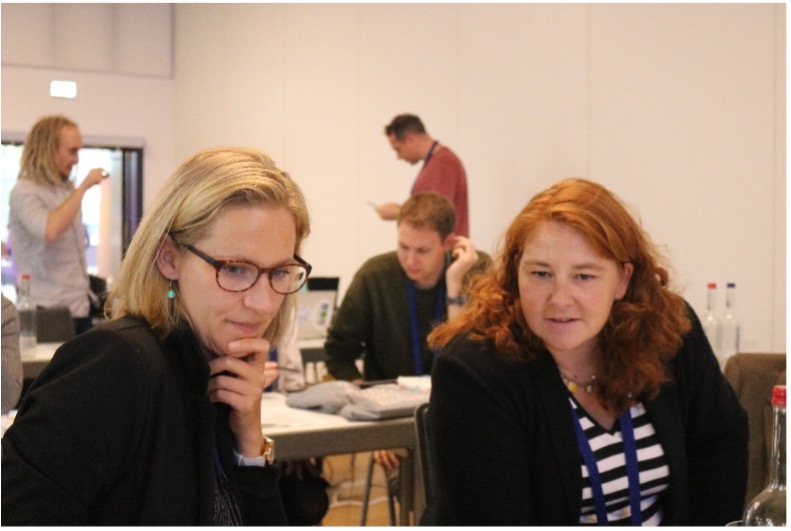
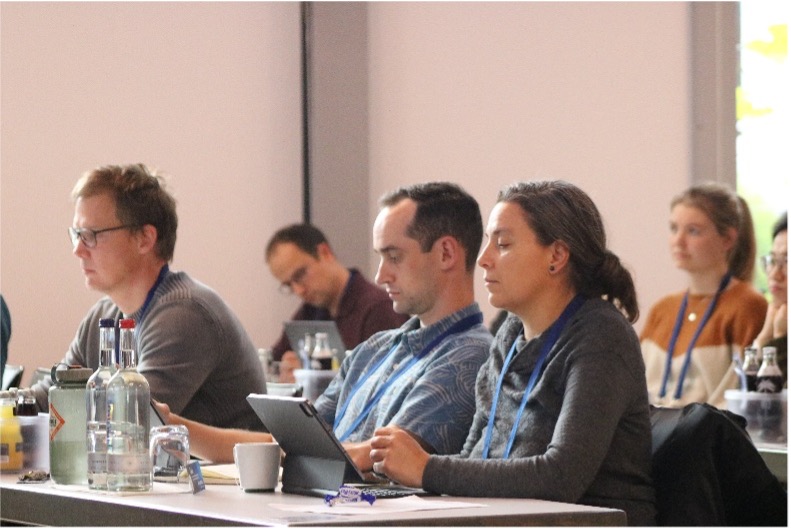
Researchers from all stages joined us from across the globe, with participants from Australia, Belgium, Brazil, China, Switzerland, the USA, and Germany. The talks covered coral and climate research from various tropical ocean basins, with researchers taking many different approaches to answer like-minded questions; from geochemists, modelling approaches, data–model comparisons and biological approaches coming together to share their research, ask questions during talks, and engage in discussions.
During the SPP 2299 Meeting & Status Seminar 2025, there were several keynote speakers, including;
- Andréa Grottoli (Ohio State University)
- Alyssa Atwood (Florida State University)
- Caroline Ummenhofer (WHOI, Woods Hole)
- Sara Sanchez (University of Colorado Boulder)
- Ben Henley (University of Melbourne)
A perspective lecture from;
As well as invited early career researcher talks;
During Phase 1 of the SPP 2299 Programme, several key research questions have been addressed (read more about them here), and during the Meeting & Status Seminar 2025, several key topics were in the spotlight.
# Key Topic – Understanding Coral Stress and Adaptation
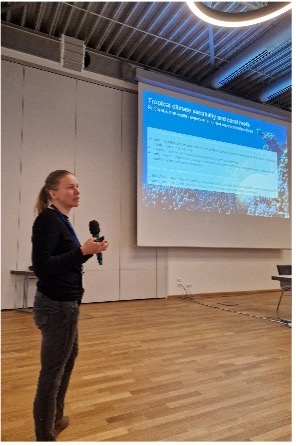
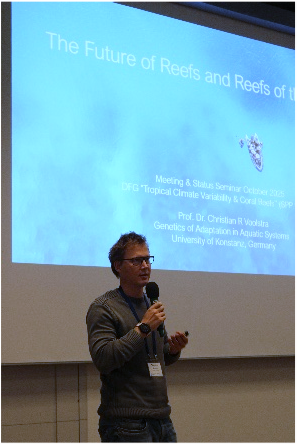
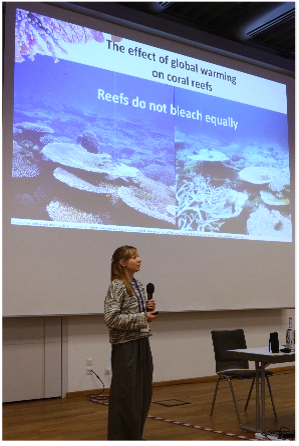
One key research topic in the SPP 2299 Programme focuses on how corals respond to heat stress and the ‘coral bleaching’ response associated with changes in their symbiotic algae communities. When symbionts are exposed to heat stress, they often lose their symbiotic algae, leading to the well-known white colouring. Some corals can adapt to rising temperatures, potentially linked to these corals hosting different symbiont types that are more heat-tolerant. Researchers in the SPP 2299 Programme, along with some guests of this meeting, have been combining field observations, laboratory experiments, and geochemical analyses to understand how these shifts occur, how long they last, and what they mean for coral resilience under ongoing climate change. Assessing stress signals in corals remains challenging. By combining geochemical and biological approaches, researchers can better interpret how corals experience and recover from thermal stress events. This interdisciplinary perspective helps connect what happens at a molecular level to broader ecosystem response. Key talks by Catarina Martins, Hannah Manns, Iliana Baums, Merlin Weichler, Christian Voolstra, and Marlene Wall.
# Key Topic – Climate Variability and the Conseqences of Short Instrumental Records
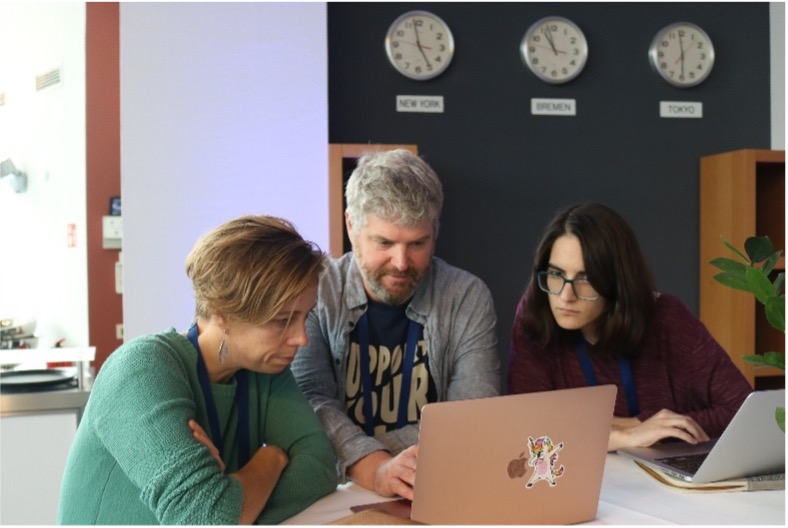
Another key feature discussed during the meeting was climate variability, particularly the variability of the El Niño-Southern Oscillation (ENSO) in the past and present, as it’s one of the main drivers of changes in ocean temperature and precipitation patterns worldwide. Model-based studies on ENSO help to understand how these large-scale climate fluctuations influence coral reef environments. By linking climate model simulations with coral-based proxy data, researchers can reconstruct past ENSO variability and assess how it affects coral growth, bleaching events, and geochemical signals recorded in coral skeletons (highlighted by Donghao Li, Sara Sanchez, Alyssa Atwood and Mandy Freund). By combining these approaches, we improve our understanding of how tropical ocean atmosphere interactions impact coral reef systems under changing climate conditions. Additionally, other researchers focused on coral reconstructions that fill in regions and further understanding of ENSO and other climate variability globally (highlighted by Luisa Meiritz, Eleni Anagnostou, Hana Camelia and Oliver Knebel)
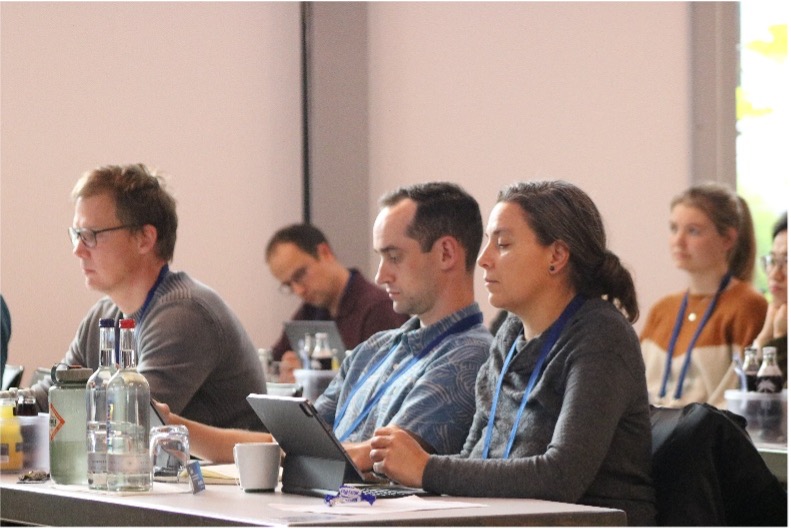
A key concept that has been a feature throughout numerous SPP 2299 meetings are that missing or incomplete sea surface temperature and wind data are a limiting factor on our understanding of tropical climate variability. These gaps can be filled by ship logs, coral records, satellite, ice cores and tree rings, to name a few sources. Large-scale temperature observations are insufficient to understand how corals respond to temperature changes; we need data from observations directly at coral locations. These site measurements capture small environmental dynamics that are often overlooked. Expanding local datasets will be key to unravelling future variability and coral reef ecosystem response, highlighted by Alyssa Atwoood, Caroline Ummenhofer and Andréa Grottoli.
# Key Topic – A Whole Globe Perspective
The Arctic, Antarctic and tropical regions are linked through oceanic and atmospheric circulation. Processes in one region can influence conditions in another, meaning that understanding tropical reefs also requires looking beyond the tropics. To address this, research within the SPP 2299 Programme combines global approaches with site-specific understanding. This perspective allows us to connect the local responses of corals to the larger climate system that shapes them.
Outreach and Public Engagement
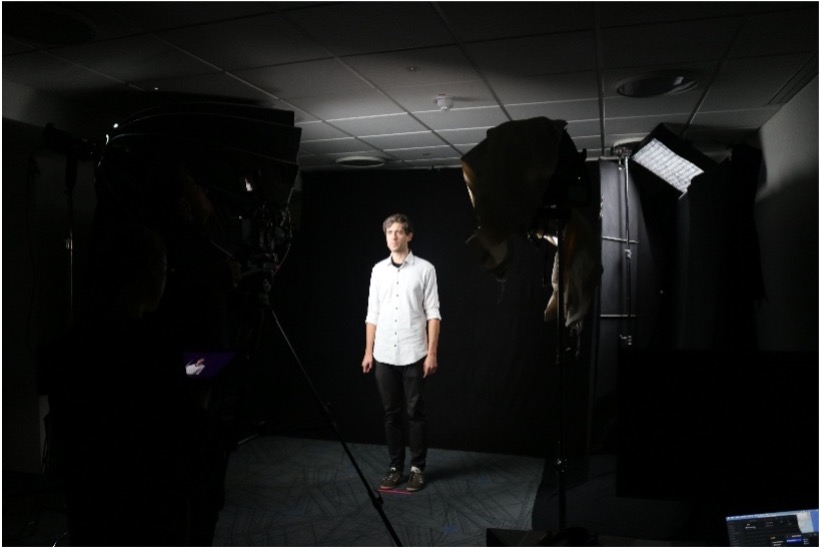
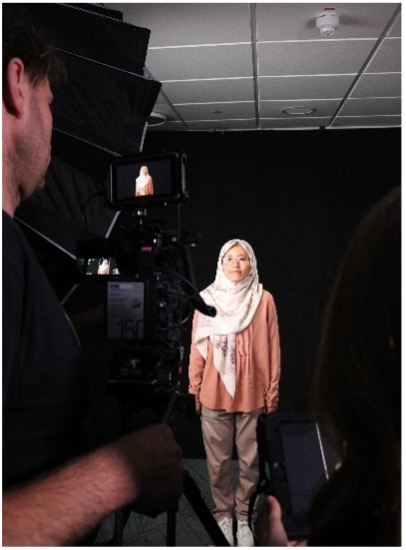
A large part of the SPP 2299 Programme is bringing science closer to the public and communicating the exciting science being conducted. Over the last two years, two professional videos were produced (have a look at our YouTube!). This year, researchers were also interviewed on-site at the meeting with a video to come out soon! These videos highlight why coral reef and tropical climate variability research matter and why it’s important to raise awareness about how our actions affect life on Earth.
Curious about science and want to learn more about our work? Follow us on Instagram, Bluesky, and YouTube. That’s where we share insights, stories, and updates from our projects.
The SPP 2299 Meeting & Status Seminar 2025 was a successful and inspiring event which focused on results developed during the first phase of the SPP 2299 programme (2022-2025), as well as insights from international collaborators. More than 50 researchers from all over the world came together to share ideas, ask questions, and discuss their work on tropical climate variability and coral reefs.
This meeting again highlights how exciting and collaborative science can be from early-career researchers to experienced experts, providing an opportunity to contribute, learn, and network.
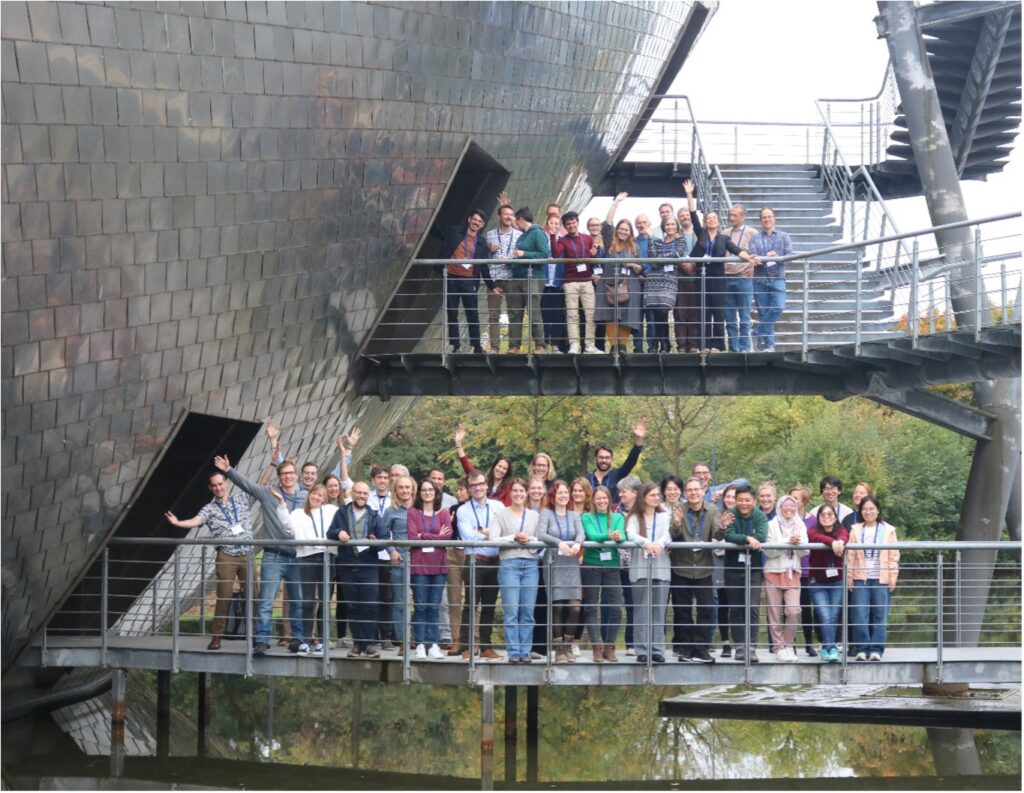
Image credit to Larissa Roy.